
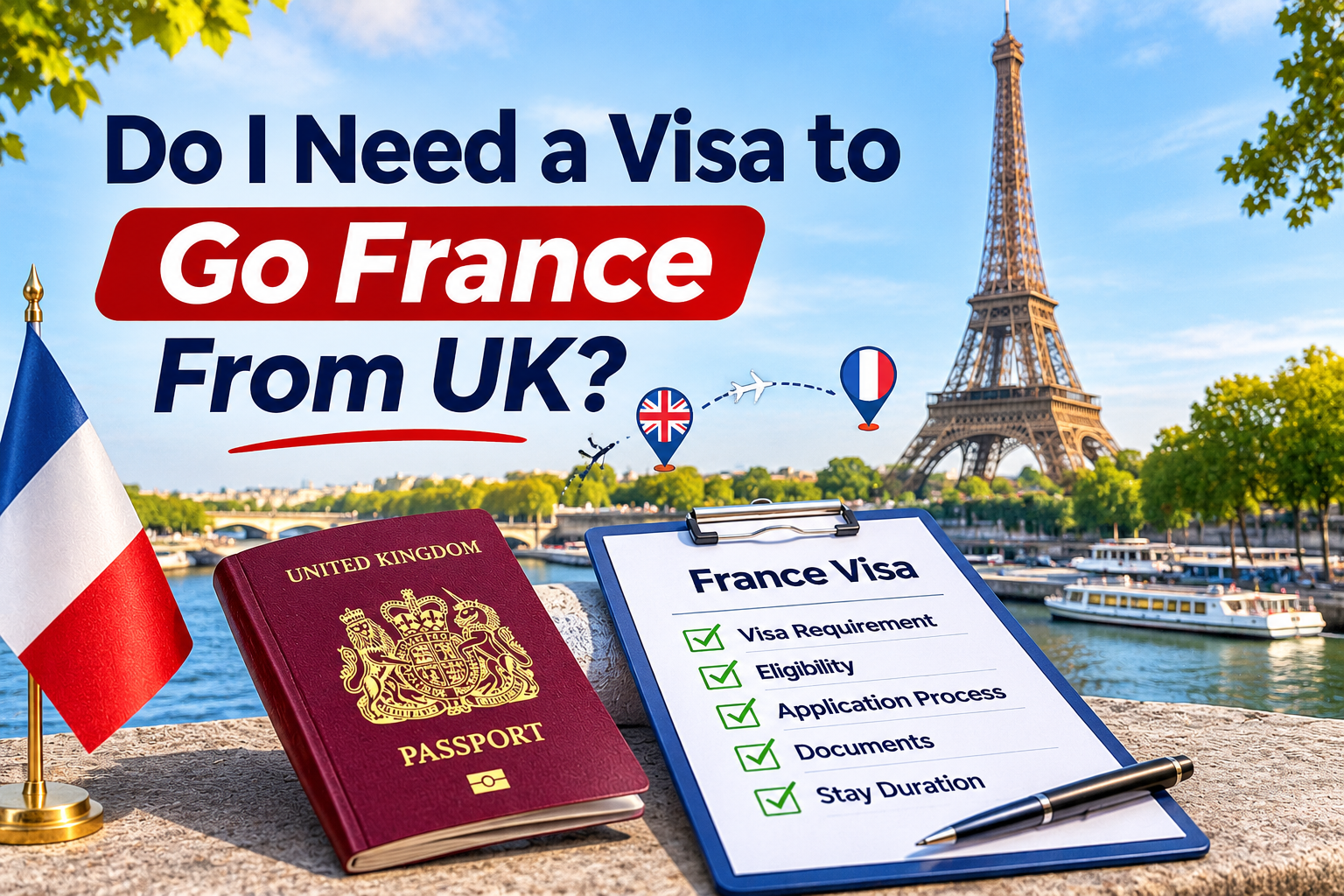
If you are a British citizen travelling to France for a holiday or another qualifying short visit, you normally do not need a visa for stays of up to 90 days in any 180-day period.
This visa-free allowance applies across the Schengen area, not just France. It can cover tourism, visiting family or friends, business meetings, cultural or sporting events, and certain short-term study or training.
However, the answer to “do I need a visa to visit France from UK?” can be different if you plan to work, stay for more than 90 days, move to France, or live in the UK but travel on a non-British passport.
British travellers must also meet France’s passport and border requirements. In 2026, the EU’s Entry/Exit System (EES) is operational, while ETIAS is not yet operational and applications are not currently being accepted.
This guide explains the France visa rules for UK travellers, including the 90/180-day rule, passport validity, EES, ETIAS, Schengen visas and the additional considerations for people living in the UK under immigration permission.
Do British Citizens Need a Visa for France?
For most short visits, British citizens do not need a visa for France.
If you hold a full British citizen passport, you can generally travel to France and other Schengen countries without a visa for up to 90 days in any rolling 180-day period.
Visa-free travel can cover purposes including:
- holidays and tourism;
- visiting family or friends;
- business meetings;
- cultural and sporting events; and
- certain short-term study or training.
Different requirements apply if you want to work, live or remain in France long-term.
Do British Citizens Need a Visa for Paris?
No. Paris does not have separate visa requirements from the rest of France.
Therefore, if you are asking “do British need visa for Paris?”, a British citizen generally does not need a visa for an eligible short visit, provided the trip remains within the Schengen 90/180-day allowance and all other entry requirements are satisfied.
When Do British Citizens Need a French Visa?
You may need appropriate French immigration permission if you intend to:
- stay for more than 90 days;
- work in France;
- move permanently or long-term to France;
- undertake long-term study; or
- carry out an activity not permitted under the short-stay rules.
The correct permission depends on what you intend to do and how long you plan to remain in France.
How Long Can You Stay in France Without a Visa?
British citizens can normally spend up to 90 days in any 180-day period in the Schengen area without obtaining a visa. The crucial point is that the limit applies across the whole Schengen area.
How Does the 90 Days in 180 Days Rule Work?
The 180-day period is rolling. You do not receive a separate 90-day allowance for every Schengen country.
For example, if during the relevant period you spend:
- 30 days in France;
- 20 days in Spain; and
- 15 days in Italy;
you have already used 65 of your 90 available Schengen days.
This matters particularly for frequent travellers and British citizens who regularly visit family or own second homes in Europe.
Can You Stay in France Longer Than 90 Days?
Yes, potentially, but you cannot simply continue relying on the normal visa-free visitor rules.
If you intend to remain in France for more than 90 days, you will generally need to satisfy the relevant French long-stay immigration requirements.
Depending on your reason for staying, a long-stay visa or residence permission may be required. Leaving France briefly does not automatically reset the 90-day Schengen allowance.
France Entry Requirements From the UK in 2026
Not needing a visa does not mean there are no entry requirements. British travellers should check the following before travelling:
| Requirement | What to Check |
|---|---|
| Visa | Usually not required for an eligible short visit |
| Passport | Must satisfy Schengen issue-date and expiry rules |
| 90/180 rule | Previous visits to Schengen countries count |
| EES | Operational in 2026 |
| ETIAS | Not operational at the time of writing |
| Accommodation | Evidence may be requested |
| Funds | You may need to show sufficient funds |
| Return/onward travel | Evidence may be requested |
French border officials may ask you to demonstrate that you have suitable accommodation, enough money for your visit, appropriate travel insurance and a return or onward journey.
If you are staying with relatives, friends or another private host, an attestation d’accueil may also be relevant depending on your circumstances.
What Are the Passport Requirements for France?
Yes, British citizens need a valid passport to travel to France.
For travel under the normal Schengen rules, your passport must generally:
- have been issued less than 10 years before the date you arrive in France; and
- expire at least three months after the date you intend to leave the Schengen area.
Both conditions matter. This means that simply checking whether your passport has expired is not enough.
How Long on a Passport to Travel to France?
Your passport generally needs at least three months’ validity beyond your intended departure from the Schengen area. You must also check its original issue date.
If your passport does not satisfy both requirements, renew it before travelling rather than risking problems at the border.
Do UK Citizens Need ETIAS to Travel to France?
British citizens are expected to require ETIAS for qualifying visa-free travel to France once the system becomes operational. However, there is an important distinction for travellers in 2026:
ETIAS is currently not operational, and applications are not being accepted at the time of writing.
You therefore should not pay a third-party website claiming it can currently obtain an official ETIAS authorisation for you. Once ETIAS becomes operational, it will apply to eligible visa-exempt travellers visiting participating European countries, including France.
Is ETIAS a Visa?
No.
ETIAS stands for the European Travel Information and Authorisation System. It is a travel authorisation for eligible visa-exempt travellers; it is not a Schengen visa.
Even once ETIAS becomes operational, having an approved authorisation will not itself guarantee admission to France. Travellers will still have to satisfy applicable border requirements.
Do I Need an ETA to Travel to France?
For France, the relevant European system is called ETIAS, not ETA. The UK’s own electronic travel-authorisation system uses the term ETA, which can cause confusion. For eligible British citizens travelling to France, ETIAS is the European travel-authorisation system to watch.
What Is EES and How Does It Affect UK Travellers?
The Entry/Exit System (EES) is different from ETIAS. EES is a digital border system used to record eligible non-EU nationals entering and leaving participating European countries for short stays. It became fully operational across participating external border crossing points on 10 April 2026.
British travellers making short visits may therefore be required to provide biometric information, including:
- a facial image; and
- fingerprints.
You do not need to purchase an EES authorisation before travelling. A simple way to remember the distinction is:
EES = border entry and exit recording
ETIAS = pre-travel authorisation once operational
Schengen visa = immigration permission required by visa nationals
They are three different things.
Do You Need a Visa for France With a UK BRP or eVisa?
This is where many UK residents make a mistake.
Having permission to live in the UK does not automatically give you the same travel rights as a British citizen.
If you live in Britain under:
- a Skilled Worker visa;
- Student permission;
- spouse or partner permission;
- another family route;
- Indefinite Leave to Remain; or
- another UK immigration category,
your need for a French visa can depend on your nationality, passport, purpose of travel and individual circumstances. A UK BRP or eVisa proves or records your UK immigration position. It does not automatically make a visa-required nationality visa-exempt for France.
Could Travelling Abroad Affect Your UK Immigration Position?
There is also a second issue that UK visa holders should consider. Even if France allows you to enter, time spent outside the UK may be relevant to your UK immigration plans, depending on your route and circumstances.
Overseas absences can potentially matter when considering:
- continuous residence;
- Indefinite Leave to Remain;
- settlement; and
- British citizenship.
If you are unsure how an extended or frequent period abroad could affect your UK immigration position, Book a Free Online Assessment before making decisions based on assumptions about your residence requirements.
Which France Visa Do You Need From the UK?
If you actually require a visa, the appropriate route depends on your nationality, purpose of travel and intended length of stay.
France Tourist Visa From UK
If you are legally resident in the UK but your nationality requires a visa for short Schengen visits, you may need a short-stay Schengen visa to visit France for tourism.
This should not be confused with British citizens’ general visa-free position for qualifying short trips.
France Visit Visa From UK
If you intend to visit family or friends in France and your nationality requires a visa, a short-stay Schengen visa may be relevant.
The supporting documents required will depend on your circumstances, including where you will stay and the purpose of your visit.
France Schengen Visa From UK
If you are a UK resident who requires a Schengen visa, you should first establish whether France is the correct country through which to make your application based on your actual travel plans.
Do not apply through France simply because an appointment appears easier to obtain if another Schengen country is the appropriate destination for your application.
Can I Get a Long-Term Visa for France?
Yes. France provides long-stay visa routes for qualifying applicants. If you intend to stay for more than 90 days, the appropriate permission depends on your purpose, such as work, study, family circumstances or another qualifying reason.
Long-stay immigration should be treated separately from the rules for an ordinary short holiday.
What Documents Do You Need for a French Schengen Visa?
Applicants who require a French Schengen visa may need documents relating to:
- a valid passport;
- legal residence in the UK;
- completed visa application;
- passport photographs;
- purpose of travel;
- accommodation;
- travel itinerary;
- financial resources;
- travel medical insurance; and
- other evidence relevant to the application.
The exact evidence varies according to the applicant and visa type. Use the personalised document requirements generated through the official France-Visas process rather than relying entirely on a generic online checklist.
What Documents May British Citizens Need at the French Border?
This is a separate issue. Even if you are visa-exempt, border officials may ask for evidence relating to:
- accommodation;
- sufficient funds;
- travel insurance; and
- return or onward travel.
Keep important travel evidence accessible rather than buried in checked luggage or unavailable offline.
How to Apply for a France Visa From UK
If your nationality or circumstances mean you require a visa, use the official French application process.
Step 1: Check Whether You Need a Visa
Start with your nationality, passport, UK immigration status, purpose of travel and intended duration.
Step 2: Choose the Correct Visa
Establish whether you require a short-stay Schengen visa, long-stay visa or another form of permission.
Step 3: Complete the France Visa Application
Use the official France-Visas service to determine your requirements and complete the relevant application.
Step 4: Prepare Your Documents
Follow the document requirements generated for your application.
Incomplete or inconsistent evidence can create avoidable problems.
Step 5: Book Your Visa Appointment
For UK-based applications, French visa decisions are made by the French Consulate General in London.
TLScontact is the authorised external provider accepting applications at visa application centres in:
- London;
- Manchester; and
- Edinburgh.
Step 6: Attend the Appointment and Provide Biometrics
Take your passport, appointment confirmation and required supporting documents. Biometric information may also be collected where applicable.
Step 7: Pay the Relevant Fees
Pay the applicable visa and authorised service fees through the official process. Be cautious of websites charging unnecessary fees for services they imply are official.
Step 8: Wait for a Decision
Submitting an application does not guarantee approval. Avoid making non-refundable arrangements that depend entirely on receiving your visa by a particular date.
How Much Does a France Visa Cost?
British citizens making an eligible visa-free short visit do not need to pay for a French Schengen visa because they do not require one. Applicants who do need a visa must pay the applicable fee for their category.
France-Visas currently lists standard application fees including:
| Visa Type | Standard Fee |
|---|---|
| Short-stay visa | €90 |
| Long-stay visa | €99 |
Reduced fees and exemptions can apply to some applicants. UK applications submitted through TLScontact can also attract a separate service fee. Because visa and service charges can change, check the official France-Visas information immediately before applying rather than relying on an old article or screenshot.
How Long Does a France Visa Take?
France-Visas advises applicants in the UK to allow at least 20 working days for processing delays and permits applications to be submitted up to 180 days before the intended travel date.
Once transferred to the French Consulate General in London, applications are generally processed within 2 to 15 working days, although this is guidance rather than a guaranteed decision time.
Some cases can take longer because of:
- additional checks;
- missing or inconsistent documents;
- the visa category;
- individual circumstances; or
- seasonal demand.
Apply early rather than relying on the shortest advertised processing period.
Can Travelling to France Affect Your UK Immigration Status?
For a British citizen taking a normal holiday, this is generally not a UK immigration issue.
For someone living in Britain under immigration permission, however, the position can be different.
There are two separate questions:
Can I enter France?
and
Could my time outside the UK affect my UK immigration position?
The first concerns French and Schengen entry rules.
The second concerns UK immigration law.
Depending on your immigration route and circumstances, overseas absences may be relevant to continuous residence, ILR, settlement or British citizenship.
This becomes particularly important if you:
- travel abroad frequently;
- plan a long stay in France;
- are approaching an ILR application;
- are building a qualifying residence period; or
- intend to apply for British citizenship.
If that describes your situation, get advice based on your actual immigration history rather than assuming that permission to travel automatically means your UK residence position is unaffected.
Book a Free Online Assessment with UK Immigration Solicitors to discuss your UK immigration circumstances.
France Travel Checklist for UK Travellers
Before travelling, check these eight points:
- Visa: Do you require one based on your passport and purpose of travel?
- Passport: Does it meet both the issue-date and expiry requirements?
- 90/180 rule: How many Schengen days have you already used?
- EES: Are you prepared for the biometric border process?
- ETIAS: Check its official status shortly before departure.
- Documents: Keep accommodation, insurance and travel evidence available.
- Return journey: Have your return or onward travel details accessible.
- UK immigration status: Could a long absence affect your UK visa, ILR or citizenship plans?
Frequently Asked Questions
Do I Need a Visa to Go to France in 2026?
British citizens generally do not need a visa for an eligible short visit to France of up to 90 days in any 180-day period. A visa or other permission may be required for longer stays, work or other activities.
Do British Citizens Need a Visa for Paris?
No separate visa applies to Paris. British citizens generally benefit from the same short-stay visa-free rules when visiting Paris as elsewhere in France.
How Long Can a British Citizen Stay in France Without a Visa?
Normally up to 90 days in any 180-day period across the Schengen area. Time spent in other Schengen countries during the relevant period also counts.
Do UK Citizens Need to Apply for ETIAS?
Not yet. ETIAS is currently not operational and no applications are being accepted. Once it becomes operational, eligible British visa-exempt travellers will generally need an ETIAS travel authorisation for qualifying short visits to France.
Do I Need an ETA to Travel to France?
The relevant European travel-authorisation system is called ETIAS, not ETA. ETIAS is separate from the UK’s ETA system.
Do I Need a Visa for France With a UK BRP or eVisa?
A UK BRP, eVisa or other UK immigration permission does not automatically give you visa-free entry to France. Your nationality, passport, purpose of travel and circumstances determine which French entry rules apply.
What Documents Do I Need to Enter France From the UK?
British citizens need a passport meeting the applicable Schengen requirements. French border officials may also request evidence of accommodation, sufficient funds, travel insurance and return or onward travel.
Can I Stay in France for Longer Than 90 Days?
Potentially, but you must meet the appropriate French long-stay immigration requirements. Depending on your purpose, a long-stay visa or residence permission may be required.
Need Advice About Your UK Immigration Status Before Travelling?
Travelling to France may be straightforward, but the effect of spending significant time outside the UK can be more complicated if you hold UK immigration permission or are planning a future settlement or citizenship application.
At UK Immigration Solicitors, we can assess your UK immigration circumstances, including issues relating to residence and overseas absences, and help you understand the potential impact on your future plans.
Book a Free Online Assessment to tell us about your circumstances and find out what your next step should be.