
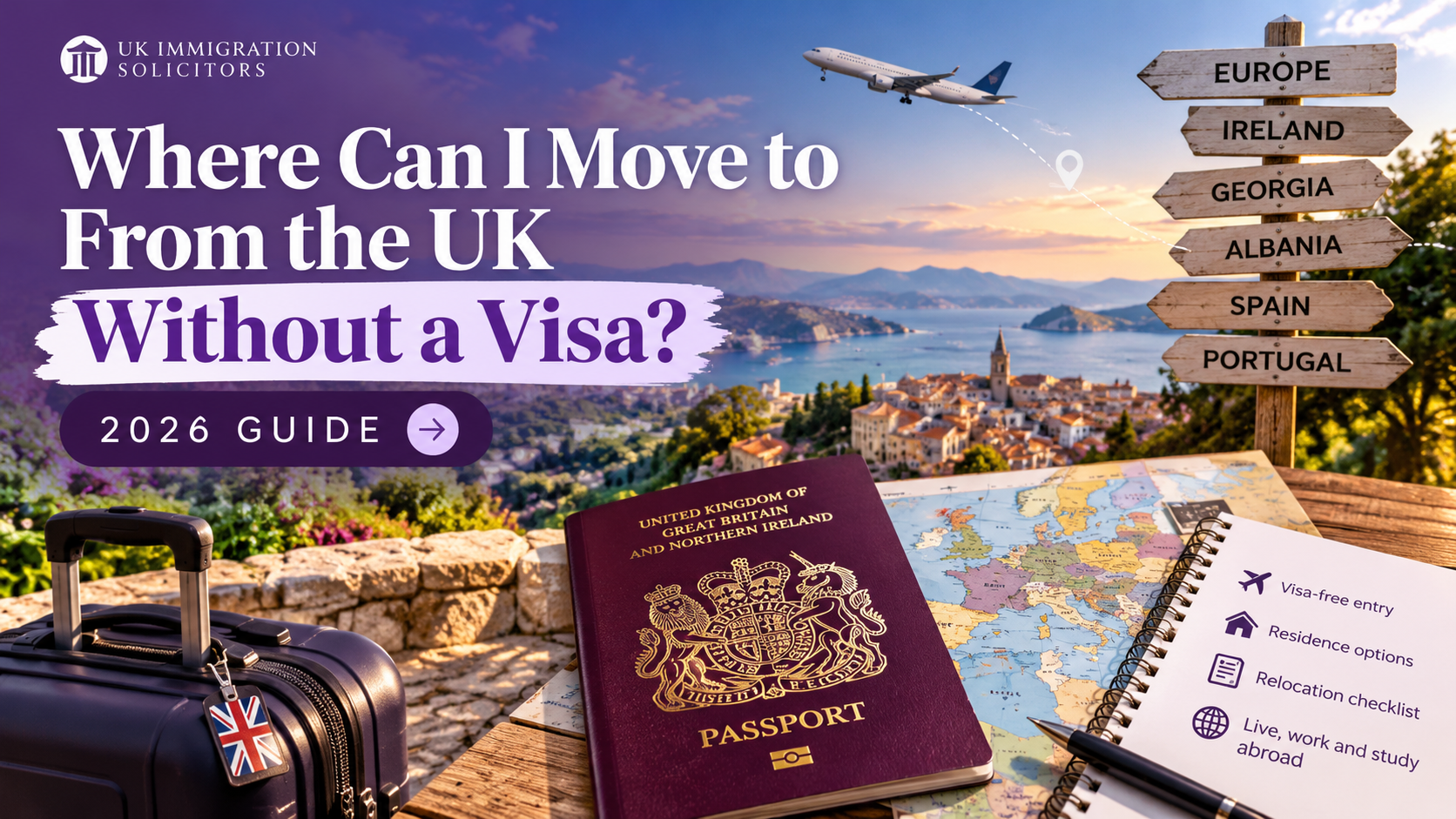
Where can I move to from the UK without a visa? This is a common question among British citizens considering a fresh start overseas. Whether you want warmer weather, a different lifestyle, better career opportunities or a more affordable place to live, understanding your immigration options is essential before deciding where to relocate.
A British passport allows visa-free entry to many destinations. However, entering a country as a tourist is not the same as receiving permission to live, work or settle there permanently. Some destinations permit relatively long visa-free visits, while others require a residence permit once you plan to establish a home.
This guide explores some of the easiest countries to move to from the UK, explains which destinations allow British citizens to stay without applying for a visa in advance, and outlines the practical steps required for long-term relocation. It also covers moving to Europe after Brexit and what happens to your UK immigration status if you leave the country.
The Quick Answer
Ireland is one of the clearest options for British citizens who want to move abroad without needing a visa or residence permit. Under the Common Travel Area, British citizens can generally live, work and study in Ireland. Other countries, including Georgia, Albania, Turkey, Mexico and several European destinations, offer visa-free short stays, but permanent relocation usually requires additional immigration permission.
Understanding the Difference
Visa-Free Travel Is Not the Same as Visa-Free Living
01
Visa-Free Entry
You may enter for a permitted temporary visit without first applying for a traditional visa.
02
Residence Permission
You have legal permission to live in a country beyond the permitted visitor period.
03
Permanent Settlement
You qualify for long-term or permanent residence under the destination country’s laws.
Where Can British Citizens Move Without a Visa?
British citizens can travel to a wide range of countries without obtaining a visitor visa in advance. However, the options for moving permanently without immigration permission are much more limited.
Ireland stands out because British citizens benefit from residence and employment rights under the Common Travel Area. Other destinations can be attractive for extended visits, exploring life abroad or considering a future move, but their visa exemptions generally do not provide automatic residence rights.
Visa-Free Countries for British Citizens: 2026 Comparison
The table below compares several destinations frequently considered by people looking to move abroad from the UK. The periods refer to ordinary visa-free visitor entry for holders of a full British citizen passport, not automatic permission to live or work permanently.
| Destination | Ordinary Visa-Free Visit | Can You Relocate Permanently Without Further Permission? |
|---|---|---|
| Ireland | British citizens can reside indefinitely under CTA arrangements | Generally yes, under the Common Travel Area |
| Georgia | Up to 1 year | No automatic permanent residence; separate work and longer-term permissions apply |
| Albania | Up to 90 days in 180 days | No; longer stays require suitable permission |
| Spain and Portugal | Up to 90 days in any 180 days across Schengen | No; long-term residence usually requires a visa or permit |
| Turkey | Up to 90 days in 180 days | No; residence and work have separate rules |
| Mexico | Visa-free tourism; duration granted at entry, up to 180 days | No; residence requires an appropriate immigration route |
| Japan | Normally up to 90 days for tourism or permitted business visits | No; work and long-term stays require relevant permission |
These entry arrangements can change, and other conditions may apply, including passport validity, insurance, registration and permitted activities. Before travelling, review the destination-specific GOV.UK foreign travel advice and the destination government’s immigration rules.
Ireland: The Clearest Visa-Free Relocation Option for British Citizens
If you are asking where British citizens can live permanently without a visa, Ireland is one of the most straightforward answers. The Common Travel Area is a longstanding arrangement between the United Kingdom, Ireland and the Crown Dependencies that provides important reciprocal rights for British and Irish citizens.
Under these arrangements, British citizens can generally move to Ireland, establish a home, work and study without applying for an Irish residence permit or employment permit. These rights are distinct from ordinary visa-free tourism and remain relevant after Brexit.
Destination spotlight
Ireland
A genuine option for living abroad without applying for a residence visa
Residence
Generally permitted
Employment
Generally permitted
Residence permit
Not normally needed
Can British Citizens Live in Ireland Permanently?
British citizens generally have the right to live in Ireland under Common Travel Area arrangements without needing ordinary immigration permission. This makes Ireland materially different from countries that simply allow a 90-day tourist visit.
However, moving to Ireland still requires practical preparation. Finding accommodation, arranging appropriate identification, understanding Irish tax obligations and meeting relevant administrative requirements are important parts of establishing your life there.
What About Family Members Who Are Not British Citizens?
The Common Travel Area rights do not automatically extend to every non-British family member. A spouse, partner or other relative who holds a different nationality may need to satisfy separate Irish immigration requirements, depending on their circumstances.
Before making plans for a family move, check the UK government’s guidance on living in Ireland and the relevant Irish immigration rules.
Other Countries British Citizens Can Visit Without a Visa
If you are considering where to move abroad from the UK, a longer visa-free stay may offer time to experience everyday life in another country before deciding whether to pursue residence. Several destinations offer opportunities for exploratory visits, although the right to work or settle is a separate question.
Georgia: Up to One Year of Visa-Free Stay
Georgia is notable because British citizens can ordinarily enter and stay for up to one year without a visa. That longer period can be attractive to people comparing possible destinations for relocation, particularly when they want more time than a standard short holiday allows.
However, a one-year visa-free stay should not be confused with permanent immigration status. Georgia changed its rules for foreign nationals working in the country in March 2026, including requirements relating to work permits for certain employment, remote work and business activities. Anyone planning to work or establish a business should check the relevant permit and residence requirements before relying on the visitor exemption.
For detailed current requirements, consult Georgia’s entry requirements for British travellers.
Albania: A European Destination for Short Visa-Free Visits
Albania allows British citizens to visit without a visa for up to 90 days in a 180-day period for tourism or business. Its location in southeastern Europe makes it a country some British nationals consider when researching alternative lifestyles and longer-term accommodation.
For stays beyond the permitted visitor period, you must consider the appropriate long-stay visa or residence permit. Applicants should confirm the rules for their intended purpose, particularly if they plan to work, run a business or remain for an extended period.
Turkey: Visa-Free Entry for Qualifying Short Visits
British citizen passport holders can generally visit Turkey without a visa for tourism or permitted business travel for up to 90 days within a 180-day period. This provides an opportunity to explore different regions and assess their suitability before making longer-term plans.
Establishing residence, working locally or remaining beyond the visitor allowance involves separate immigration requirements. Travellers should also check regional travel advisories and passport validity rules before departure.
Mexico: Visa-Free Tourism With Residence Options
British citizens travelling to Mexico for tourism generally do not need to obtain a visa beforehand. Mexican immigration authorities determine the permitted duration of each visit, which can be up to 180 days but should not be assumed automatically.
Anyone considering relocating to Mexico permanently or working there must identify a suitable immigration route. Tourist entry does not provide unrestricted employment or permanent residence rights, and additional conditions apply to longer-term stays.
Japan: Short Visa-Free Visits, Different Long-Term Rules
British citizens can generally enter Japan for tourism or certain business visits for up to 90 days without applying for a visa in advance. This can provide an opportunity to explore the country before making an informed decision about a longer-term move.
However, living, working or studying in Japan for an extended period requires the appropriate immigration status. Short-term visitor permission should not be used as a substitute for a residence or employment route.
What Are the Easiest Countries to Move to From the UK?
The easiest country to move to from the UK depends on what you mean by moving. A destination that offers uncomplicated tourist entry is not necessarily easy for a British citizen to relocate to permanently. Employment requirements, income thresholds, family circumstances, healthcare arrangements and residence permits can substantially change the answer.
For a British citizen seeking a location where immigration permission is not ordinarily required for living and working, Ireland stands apart. For someone researching an extended temporary visit before applying for residence, countries such as Georgia or Albania may be worth investigating, provided the relevant activity and immigration restrictions are respected.
Choose Your Relocation Route
Different relocation goals require different permissions.
ROUTE A
Move and work without an ordinary visa
Consider Ireland if you are a British citizen, while checking any separate requirements for non-British family members.
ROUTE B
Explore a country before relocating
Research a permitted visa-free visit, then apply for the relevant residence permission before making a permanent move.
ROUTE C
Move permanently for work, family or retirement
Compare country-specific employment, family, retirement, self-employment or other residence routes and their eligibility requirements.
What Is the Best Country to Move to From the UK?
There is no single best destination for everyone. A retired couple, a remote professional, a young family and an entrepreneur may have very different needs. Climate, affordability, language, professional opportunities, education, healthcare and residence eligibility all matter.
Rather than selecting a country based solely on visa-free entry, compare the legal pathway to your intended lifestyle. A country that provides straightforward short-term admission may still have demanding long-term residence or income requirements.
Moving to Europe After Brexit: What Has Changed?
Moving to Europe after Brexit requires additional planning for most British citizens. Although British passport holders can still travel visa-free to many European destinations for short visits, they no longer have a general automatic right to live and work across EU countries simply because they are British.
The Schengen Area generally permits qualifying British visitors to stay for up to 90 days in any rolling 180-day period. This allowance applies across the Schengen Area as a whole, not separately to every country visited.
Can British Citizens Move to Spain Without a Visa?
British citizens can generally visit Spain without a visa for a qualifying short stay under Schengen rules. However, moving to Spain for employment, retirement or longer-term residence normally requires appropriate immigration permission.
The right route depends on factors such as your intended activities, financial circumstances and whether you have qualifying residence rights through another nationality or relevant legal arrangement.
Can British Citizens Move to Portugal Without a Visa?
Portugal also participates in the Schengen Area. British citizens may generally enter for permitted short visits without a visa, but this does not automatically entitle them to establish permanent residence or undertake employment.
People planning to move to Portugal should investigate the appropriate residence or visa category before departure. Rules for employment, passive income, entrepreneurship and other relocation purposes differ.
Does the Schengen 90/180-Day Rule Reset in Each Country?
No. Moving from Spain to Portugal does not normally create a fresh 90-day allowance. Days spent in participating Schengen countries are counted together within the relevant rolling 180-day period.
VISUAL GUIDE
The Schengen 90/180-Day Rule
For qualifying short visits, the maximum is generally 90 days in any rolling 180-day period across the whole Schengen Area.
This diagram is simplified. The actual calculation uses a rolling 180-day window, so previous travel dates must be considered.
The official GOV.UK Schengen travel guidance explains the short-stay rules and when additional permission may be required.
Where Can British Citizens Live Permanently?
For British citizens, Ireland provides an important example of residence rights that exist independently of ordinary tourist immigration permission. For most other destinations, permanent residence requires meeting the country’s own immigration or nationality conditions.
People asking where UK citizens can live abroad should distinguish between a country’s visitor entry policy and its long-term settlement rules. Many countries provide routes based on employment, family relationships, investment, professional skills or other qualifying circumstances.
Can I Move Abroad Permanently With a British Passport?
A British passport proves nationality and provides valuable international travel access, but it does not create an automatic right to settle in every visa-free destination. Outside arrangements such as the Common Travel Area, a residence application or other qualifying status will often be necessary.
If you also hold citizenship of another country, that nationality may provide separate residence and work rights. Dual nationals should check the relevant rules for both citizenships before making long-term plans.
How to Move to Another Country Permanently
Begin by identifying countries where you may qualify for residence. Examine the relevant requirements for employment, self-employment, family reunification or other applicable routes. Next, consider healthcare, tax residence, property arrangements and whether your family members can receive the necessary permission.
Where an immigration application is required, follow the destination country’s official procedure and do not assume that entering as a visitor allows you to switch to residence from within the country. Some immigration systems require applicants to obtain permission before travel.
Can You Move Abroad Without a Job Offer?
Possibly, depending on the destination and the residence category. Some countries offer routes based on family connections, retirement income, independent financial resources or other conditions that do not necessarily require a local employment offer.
However, eligibility standards, evidence requirements and restrictions on working vary significantly. Anyone planning to support themselves through remote work should also confirm whether that activity is permitted under the proposed immigration status.
How Does Moving Abroad Affect Your UK Immigration Status?
Leaving the United Kingdom can have significant consequences for people who are UK residents but do not hold British citizenship. Their right to return may depend on the type of immigration permission they hold, how long they remain outside the country and whether they meet continuing residence requirements.
This distinction matters because living in the UK does not mean that a person benefits from the same international visa exemptions as a British citizen. Overseas entry requirements normally depend on the nationality and travel document held, rather than UK residence alone.
What Happens to Indefinite Leave to Remain If You Move Abroad?
Ordinary UK Indefinite Leave to Remain (ILR) will generally lapse after an absence of more than two continuous years outside the UK, Ireland and the Crown Dependencies, subject to specific exceptions. An individual whose settlement permission has lapsed may need to consider the returning resident arrangements if they wish to return to live in the UK.
People planning a permanent move should therefore assess how an extended absence may affect their current immigration status before leaving. Our UK settlement and permanent residence guidance explains relevant considerations.
Does Settled Status Expire if You Live Abroad?
Settled status granted under the EU Settlement Scheme is subject to different absence rules. It will generally lapse after more than five consecutive years outside the UK and the relevant territories, with different provisions for certain Swiss citizens and their family members.
Pre-settled status also has its own conditions relating to residence and continuity. Anyone relying on EU Settlement Scheme status should check their individual circumstances, particularly if they intend to remain abroad for several years.
What If You Have a Temporary UK Visa?
Temporary immigration permission can be affected by its expiry date, absence periods and specific immigration conditions. Someone living abroad may also find that their previous period of UK residence does not qualify towards a future settlement application.
Before relocating, check whether your immigration route allows extended absences and whether your UKVI account and passport information remain accurate. For help understanding longer-term UK status, our British citizenship guidance may also be relevant.
Important for Non-British UK Residents
Do not plan international relocation using British-passport visa-free rules if you hold a different nationality. Check the entry requirements for your actual passport, and separately confirm whether a prolonged absence could affect your permission to return to the UK.
Moving Abroad From the UK: Essential Checklist
Once you have shortlisted potential destinations, the next stage is preparing for relocation. A practical moving abroad from UK checklist should cover immigration permission, finances, healthcare, tax obligations, accommodation and the documents you may need after departure.
Planning these matters in advance is especially important if you intend to leave permanently, move with children, take up employment abroad or maintain property and financial commitments in the United Kingdom.
Your Relocation Preparation Plan
01 / IMMIGRATION
Confirm passport validity, visa-free entry conditions and any work or residence permissions needed.
02 / TAX AND FINANCES
Review HMRC notification duties, tax residence, bank accounts, pensions and outstanding UK financial obligations.
03 / HEALTHCARE
Arrange suitable healthcare cover and check whether local registration or insurance is required.
04 / HOUSING AND FAMILY
Review accommodation, school enrolment, family residence rights and any translation or document requirements.
05 / UK OBLIGATIONS
Notify relevant authorities, check council tax arrangements, contact pension or benefits administrators where appropriate and review your UK immigration status.
06 / RETURN PLANNING
Keep important records and understand what documents or immigration permission you may need if you later return to the UK.
Do You Need to Tell HMRC When You Leave the UK?
You may need to notify HM Revenue and Customs when leaving the UK to live abroad permanently or work overseas. The appropriate notification method depends on your tax circumstances, including whether you submit Self Assessment returns.
Moving abroad may also affect National Insurance contributions, the treatment of UK income and potential taxation in another country. Review the relevant HMRC guidance on tax when leaving the UK before departure.
What Happens to Healthcare and Your UK State Pension?
Moving abroad permanently may affect access to NHS services and whether you need private or locally funded healthcare. The rules vary depending on the country, your circumstances and any relevant healthcare agreements.
You should also check the implications for UK pension payments, including how your destination and contribution history may affect your entitlements. GOV.UK provides a moving and living abroad guide covering these practical matters.
Final Thoughts: Where Can You Move From the UK Without a Visa?
For British citizens who genuinely want to relocate without obtaining an ordinary residence visa, Ireland is an especially important option because of the rights available under the Common Travel Area. It offers a different legal position from destinations that simply admit British tourists without requiring advance visa applications.
Georgia, Albania, Turkey, Mexico, Japan and several European destinations may also appeal to people planning life abroad. However, their visa-free arrangements generally relate to temporary entry and do not remove the need for appropriate immigration permission when working, establishing residence or remaining beyond the permitted period.
The most suitable destination depends on your nationality, employment plans, family circumstances, finances and long-term goals. Before moving, confirm both the destination country’s immigration rules and any consequences for your existing rights in the United Kingdom.
UK Immigration Solicitors
Planning to Leave the UK? Understand Your Immigration Position First.
If you hold a UK visa, Indefinite Leave to Remain or settled status, an extended period abroad could affect your immigration position. UK Immigration Solicitors provides legal advice on UK residence, settlement, nationality and returning to the UK. For permission to move to another country, consult that country’s immigration authorities or an appropriately qualified local adviser.
Frequently Asked Questions About Moving Abroad From the UK
What Is the Easiest Country to Immigrate to From the UK?
For British citizens, Ireland offers particularly straightforward residence and employment rights under the Common Travel Area. Other countries may offer uncomplicated tourist entry, but moving permanently usually involves additional immigration requirements.
Where Can British Citizens Live Permanently Without a Visa?
British citizens can generally live and work in Ireland without an ordinary visa or residence permit under the Common Travel Area. Other rights may arise through dual citizenship or specific immigration arrangements, but a British passport alone does not provide unrestricted permanent residence worldwide.
Which Country Are Most Brits Moving To?
The answer depends on the year, whether temporary or permanent moves are counted, and the data source used. Countries such as Australia, Spain, Ireland and Canada are frequently considered by British emigrants, but current official migration statistics are needed to identify the leading destination accurately.
What Countries Are Paying Brits to Move There?
Some local authorities and regional development programmes have offered financial incentives to eligible new residents. However, these schemes are usually conditional, may be temporary and do not automatically grant immigration permission. Applicants should verify the current eligibility, funding and residence rules for each programme.
Where Can I Travel From the UK Without a Visa?
British citizen passport holders can visit numerous destinations without obtaining a traditional tourist visa in advance, including Ireland, Georgia, Albania, Turkey and many European countries. The permitted period and entry requirements vary by destination.
Can I Move to Europe Without a Visa After Brexit?
British citizens can generally visit Schengen countries without a visa for up to 90 days in any rolling 180-day period. Moving to an EU country for long-term residence or employment usually requires suitable permission, except where separate nationality or residence rights apply.
What Countries Can UK Citizens Move To Easily?
The answer depends on whether the goal is temporary travel or permanent relocation. Ireland provides extensive residence rights for British citizens, while some other countries offer relatively accessible short visits. Longer-term immigration eligibility depends on each destination’s specific rules.
Can I Move Abroad Without a Job Offer?
Possibly. Certain countries have immigration routes based on family relationships, retirement income, independent financial means or other eligibility criteria. However, a visa-free tourist allowance is not permission to take up employment or settle permanently.
Can I Live in Another Country With a British Passport?
A British passport allows travel to many destinations, but unrestricted residence is not automatic. British citizens benefit from specific residence rights in Ireland, while most other long-term moves require another legal basis for staying.
Can I Move Abroad if I Have UK Indefinite Leave to Remain?
Yes, but ordinary ILR can generally lapse after more than two continuous years outside the UK, Ireland and the Crown Dependencies, subject to exceptions. Travellers must also check the immigration requirements of their proposed destination based on their passport nationality.
What Should I Do Before Leaving the UK Permanently?
Check immigration requirements, notify the relevant UK authorities, consider tax obligations, review healthcare and pensions, make housing arrangements and understand whether an extended absence could affect your UK residence or immigration status.
Does Living Abroad Affect British Citizenship?
British citizens do not ordinarily lose their citizenship simply by moving overseas. However, residence abroad can affect eligibility for certain UK services and may be relevant to other administrative or tax obligations.
Last reviewed: 21 October 2026. This guide provides general information for holders of a full British citizen passport unless otherwise stated. Entry rules and residence requirements may change. It does not constitute individual immigration or legal advice.